 In semiconductor manufacturing, effective product problem resolution depends on visibility. When yield issues occur at a specific production step, or when finished goods are frequently returned by customers, manufacturers need a reliable way to trace how those parts were created. This is where genealogy and reclamation within Tensoft SemiOps play a critical role in identifying root causes and recovering value from yield loss.
Using Genealogy to Trace Product Issues
Genealogy in SemiOps provides detailed tracking of how a specific item or lot moves through the production process. When a finished good shows quality issues or is returned by a customer, manufacturers can examine its complete production history to understand where problems may have originated.
By reviewing tracking and attribute details, users can start with a finished good and drill down into individual inventory lots. From there, genealogy reports allow further analysis by vendor lot number, wafer lot, or specific process steps. This makes it possible to see which assembly, test, or sort steps contributed to the final output.
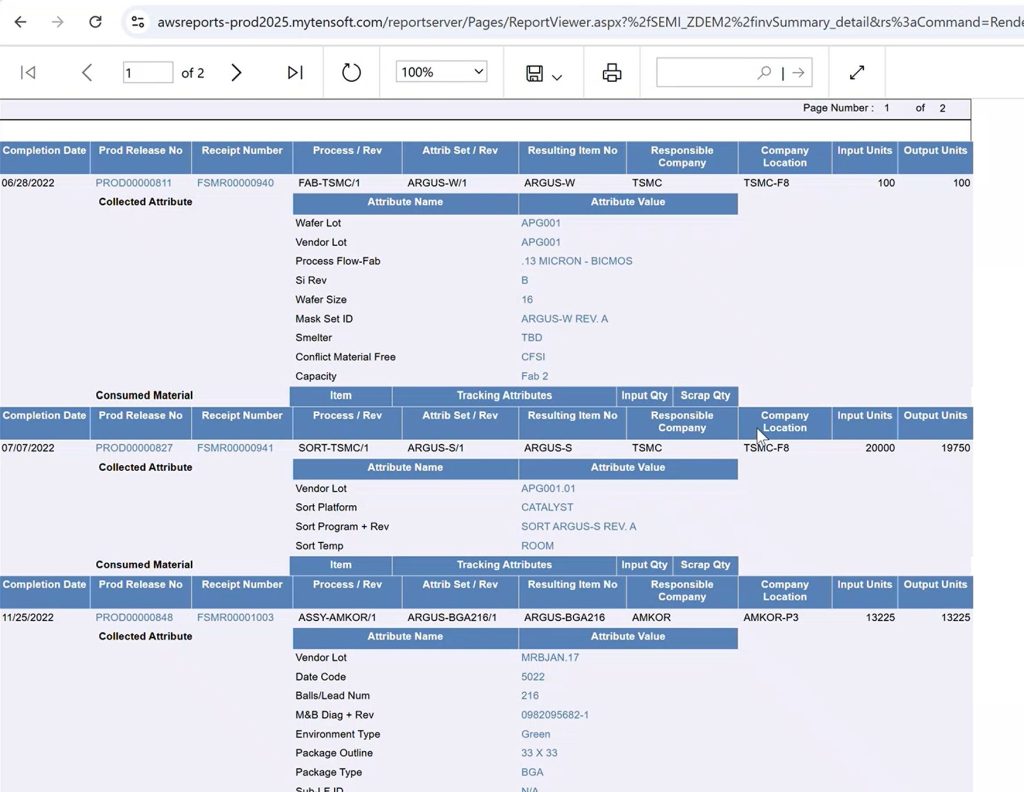
Process history and attribute inquiry reports add even more depth. These reports show input and output quantities at each step, along with recorded attributes such as sort platform, temperature, test program, and revision. With this level of detail, teams can identify trends such as specific processes that consistently yield less or result in higher return rates and pinpoint bottlenecks in production.
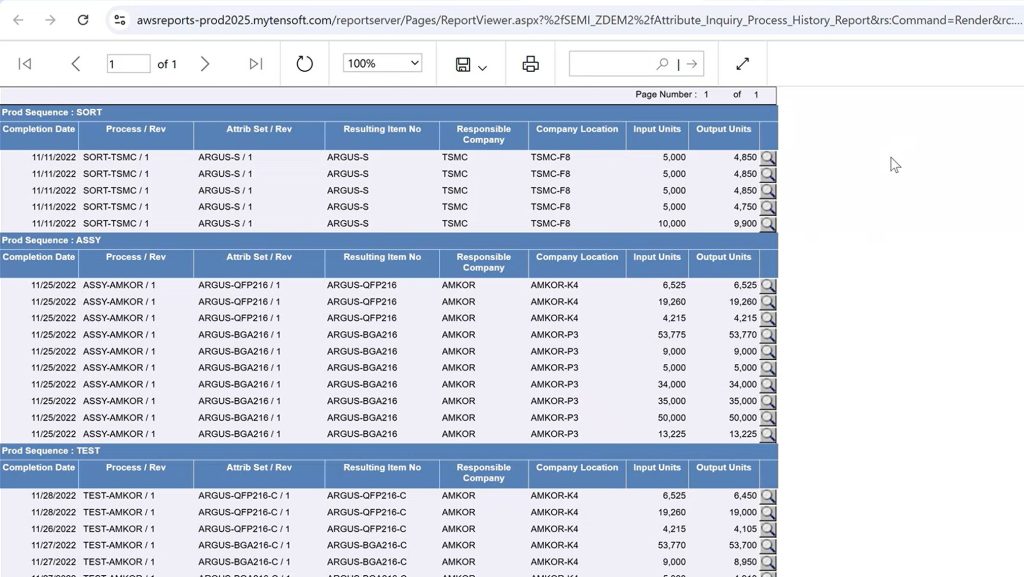
The value of genealogy lies in the quality of the data recorded. When relevant attributes are captured consistently, genealogy becomes a powerful tool for product problem resolution without introducing unnecessary noise.
Reclamation: Recovering Yield Loss
In addition to understanding where yield loss occurs, SemiOps reclamation provides a controlled way to recover it. Yield loss is typically recorded during receipt transactions when there is a difference between good units and total units processed. In some cases, these losses can be retested or reprocessed through an external step.
The reclamation screen allows users to review inventory currently marked as yield loss and reclaim it back into inventory. From this screen, users can select the appropriate inventory company and change the inventory status from yield loss to available or quarantine. The transaction date ensures inventory reporting reflects when reclaimed units become usable.
This capability allows manufacturers to recover parts that would otherwise remain unusable, making reclamation an important complement to genealogy-driven analysis.
Driving Better Outcomes
Together, genealogy and reclamation in SemiOps give semiconductor manufacturers the tools to trace product issues, understand yield behavior, and take corrective action. By combining detailed production history with controlled inventory recovery, organizations can reduce returns, improve yields, and make more informed production decisions.
To learn more about Tensoft SemiOps and its functionalities, contact us today.
