 For revenue‑sensitive industries like semiconductors, insight into past shipments isn’t enough. They need clear visibility into what will ship, when it will ship, and how confidently those plans will convert into revenue.
Tensoft DemandOps and SemiOps were designed to deliver that clarity. By combining real‑time shipment data, backlog commitments, scheduling intelligence, and operational risk visibility, DemandOps helps organizations forecast revenue accurately and identify potential revenue risks before they occur.
Why Backlog Scheduling Matters for Revenue Forecasting
Accurate revenue forecasting requires understanding of both current performance and future commitments. DemandOps delivers this with three core revenue perspectives that capture actual, expected, and combined revenue, giving teams a complete picture of revenue across the organization.
Forecasting the Next Quarter with Confidence
A common executive question is: “What revenue should we expect next quarter?” Shipped orders show what has already been booked. But forecasting revenue for upcoming months requires visibility into:
- What is currently in backlog
- When backlog items are scheduled to ship
- How reliable those shipment schedules are
DemandOps brings backlog scheduling and shipment commitments into a single, cohesive view enabling teams to forecast quarterly revenue with far greater accuracy and confidence.
Backlog Scheduling: Where Operations Meet Revenue
In SemiOps, every backlog line is assigned a commit date, representing the planned ship date. This date is critical for revenue planning because it:
- Defines when an order is expected to convert into revenue
- Feeds directly into the DemandOps Shipped + Backlog Revenue model
- Aligns operations, finance, and sales around a shared revenue timeline
The more accurate the backlog scheduling process, the more reliable the revenue forecast becomes.
Managing Revenue Risk with Backlog Visibility
Not all backlogs carry the same level of certainty. Some orders may be affected by supply chain constraints, production dependencies, or customer‑driven variables.
To address this, DemandOps and SemiOps include a Risk Category field at the sales line level. Risk indicators can reflect a high‑confidence shipment, a potential delay or a known constraint that could impact revenue timing. This context helps organizations distinguish between expected revenue and at‑risk revenue.
Scheduling teams assign risk values while planning shipments in the Schedule or ATP Schedule screens. These risk values are visible throughout SemiOps reports and flow directly into DemandOps views, including Sales Line Schedule, Backlog Revenue, and Shipped + Backlog Revenue, as well as Excel and API outputs. This ensures all stakeholders have visibility into schedule health and revenue confidence.
Revenue Reporting in DemandOps
DemandOps provides multiple revenue‑focused reports to support finance teams and executive decision‑making:
- Shipped Revenue – Recognized revenue with optional visibility into shipped but not invoiced orders
- Backlog Revenue – Anticipated revenue based on commit date (or request date if no commit date exists)
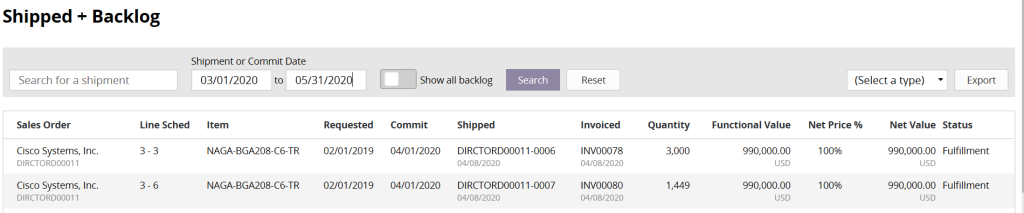
- Shipped + Backlog Revenue – A combined view of actual and planned revenue
How DemandOps Helps Drive Predictable Revenue Growth
By integrating backlog scheduling, risk visibility, and revenue analytics, DemandOps helps organizations improve forecast accuracy, align operations and finance, identify revenue risks early, and build trust through shared, transparent data.
When everyone works from the same source of truth, revenue becomes more predictable and planning becomes more strategic.
To learn more about DemandOps, visit: https://tensoft.com/tensoft-demandops/ or contact us today!